Overview
Tissue paper is an everyday essential—present in homes, restaurants, offices, hospitals, and anywhere hygiene matters. But with so many options available, choosing the right one can be surprisingly challenging. At KeGo, we believe that high-quality tissues make a real difference in comfort, cleanliness, and customer experience.
To help you make confident decisions, here’s a clear guide to understanding how tissue paper is made, why quality varies, and how to select the right product.
What Is Tissue Paper Made From?
Premium tissue paper begins with the quality of its raw materials. Most tissues on the market use one of the following:
Virgin Pulp
Made from fresh wood fibers, this type delivers:
- Exceptional softness
- High whiteness
- Strong durability
- Excellent absorbency
This is the standard for high-end tissue products.
Recycled Pulp
Produced from recycled paper materials, offering:
- Eco-friendly benefits
- Slightly rougher texture
- Lower strength depending on processing
Mixed Pulp
A balanced blend of virgin and recycled materials—ideal for brands aiming to combine performance with sustainability.
Some specialty tissues also include gentle lotions, aloe extracts, or antibacterial properties to enhance comfort and hygiene.
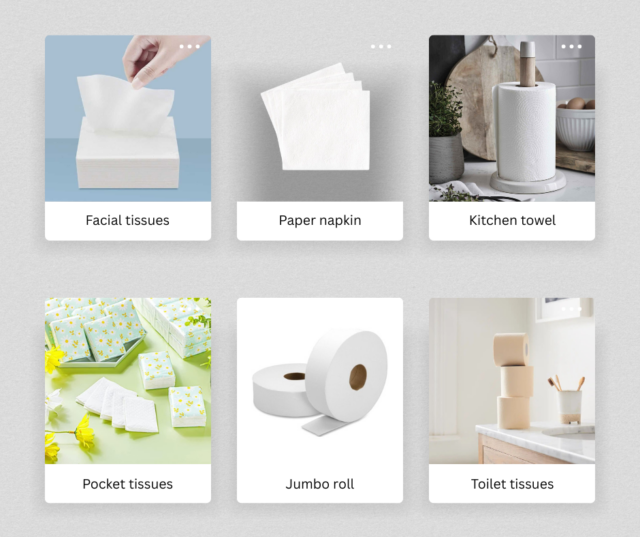
Types of Tissue Paper and Their Uses
Each type of tissue serves a distinct purpose. Here are the most common categories used across daily life and businesses:
- Facial Tissue
Soft, gentle, and ideal for skincare, makeup removal, or cold seasons.
- Toilet Tissue
Designed to dissolve quickly in water while maintaining softness and strength—safe for plumbing systems.
- Paper Towels
Highly absorbent, durable, and perfect for wiping surfaces, cleaning spills, or use in professional kitchens.
- Napkins
Suitable for dining, ranging from simple everyday napkins to premium embossed napkins for restaurants and events.
- Pocket Tissues
Compact, convenient, and travel-friendly.
Why Do Tissues Have Different Strength and Absorbency Levels?
Not all tissues are created equal. Their performance depends on several technical factors:
1. Fiber Source
- Long fibers (from softwood trees) increase strength.
- Short fibers (from hardwood trees) enhance softness.
A well-balanced fiber mix produces tissues that feel soft yet remain durable.
2. Ply Count
The number of layers directly affects quality.
- 1-ply: economical
- 2-ply: standard for daily use
- 3-ply: premium comfort, superior absorbency
3. Manufacturing Technology
Processes such as creping and embossing create texture, thickness, and a higher absorption capacity. Premium manufacturers invest heavily in modern machinery to ensure consistent quality.
4. Additives & Treatments
Lotion, moisturizer, or antibacterial coatings may be added depending on the product’s purpose.
How to Choose Quality Tissue Paper

To select the right product—whether for personal use, a business, or a brand—consider these simple but effective guidelines:
● Softness matters
High-quality tissue feels smooth and gentle on the skin.
● Strength test
A good tissue should not tear easily, even with light moisture.
● Check the ply
For reliability and comfort, choose at least 2-ply products.
● Look for certifications
Labels such as FSC, PEFC, or other quality standards ensure responsible raw materials and trustworthy production.
● Evaluate color & texture
Whiter, cleaner pulp usually indicates a better production process. Embossing patterns also improve performance.
● Choose based on purpose
Different situations require different tissues—absorbent paper towels for cleaning, soft facial tissues for skincare, premium napkins for dining, etc.
Final Thoughts
Selecting the right tissue paper is easier when you understand what defines true quality. At KeGo, we are committed to delivering tissue products that combine comfort, strength, hygiene, and sustainability—ensuring a better experience for every customer.
💬 Get in Touch
If you’re interested in our products or want to learn more about sustainable wooden packaging, feel free to reach out! I’ll be happy to assist you with any inquiries.
Ms. Quinn – Sales Executive
📧 Email: contact@kego.com.vn
📞 Mobile: (+84) 986 615 346
KEGO COMPANY LIMITED
🏢 Room 603, Kim Anh Building, Lane 78, Duy Tan Street, Cau Giay District, Hanoi, Vietnam
☎ Office: (+84 24) 3222 2333 | Fax: (+84 24) 3782 1616
🌐 www.kego.com.vn