EUDR – Challenges Facing Wood Exports to the EU Market
What is EUDR? Who Does It Apply To?
The EU Deforestation Regulation – formally known as Regulation (EU) 2023/1115 on deforestation-free products (EUDR) – came into force on June 29, 2023, with an initial 18-month transition period. While implementation was originally set for December 30, 2024, the European Commission has proposed a 12-month delay following strong calls from stakeholders, allowing businesses more time to prepare. As a result, large companies must comply with the regulation by December 30, 2025, and small and micro-enterprises (SMEs) by June 30, 2026.
This marks a significant milestone in the European Union’s ongoing efforts to combat global deforestation and forest degradation. The regulation applies to relevant products produced within the EU or imported into the EU. It targets seven key commodities: wood, rubber, coffee, cattle (beef), palm oil, cocoa, and soy. In Vietnam, the three most affected sectors are wood, rubber, and coffee.
Vietnam’s Wood Industry Faces Major Challenges Under EUDR
To comply with EUDR, importers must provide precise geolocation data of the land where the products were sourced and prove that no deforestation or forest degradation has occurred at those sites since December 31, 2020. However, this poses several challenges, particularly for Vietnam’s wood industry:
- The supply chain is highly fragmented, involving hundreds of thousands – even millions – of smallholder farmers. Each household typically owns multiple small plots, often acquired through various means: state allocation, purchase, or self-clearing. Many of these farmers lack proper land ownership documentation, making legal verification difficult.
- Due to the small-scale nature of production, farmers rarely sell directly to processing companies. Instead, they rely on local traders or middlemen, with transactions often informal and undocumented. Price and product quality tend to take priority, while traceability documentation is frequently overlooked.
An Opportunity for Ke Go’s Wooden Disposable Cutlery in the EU Market
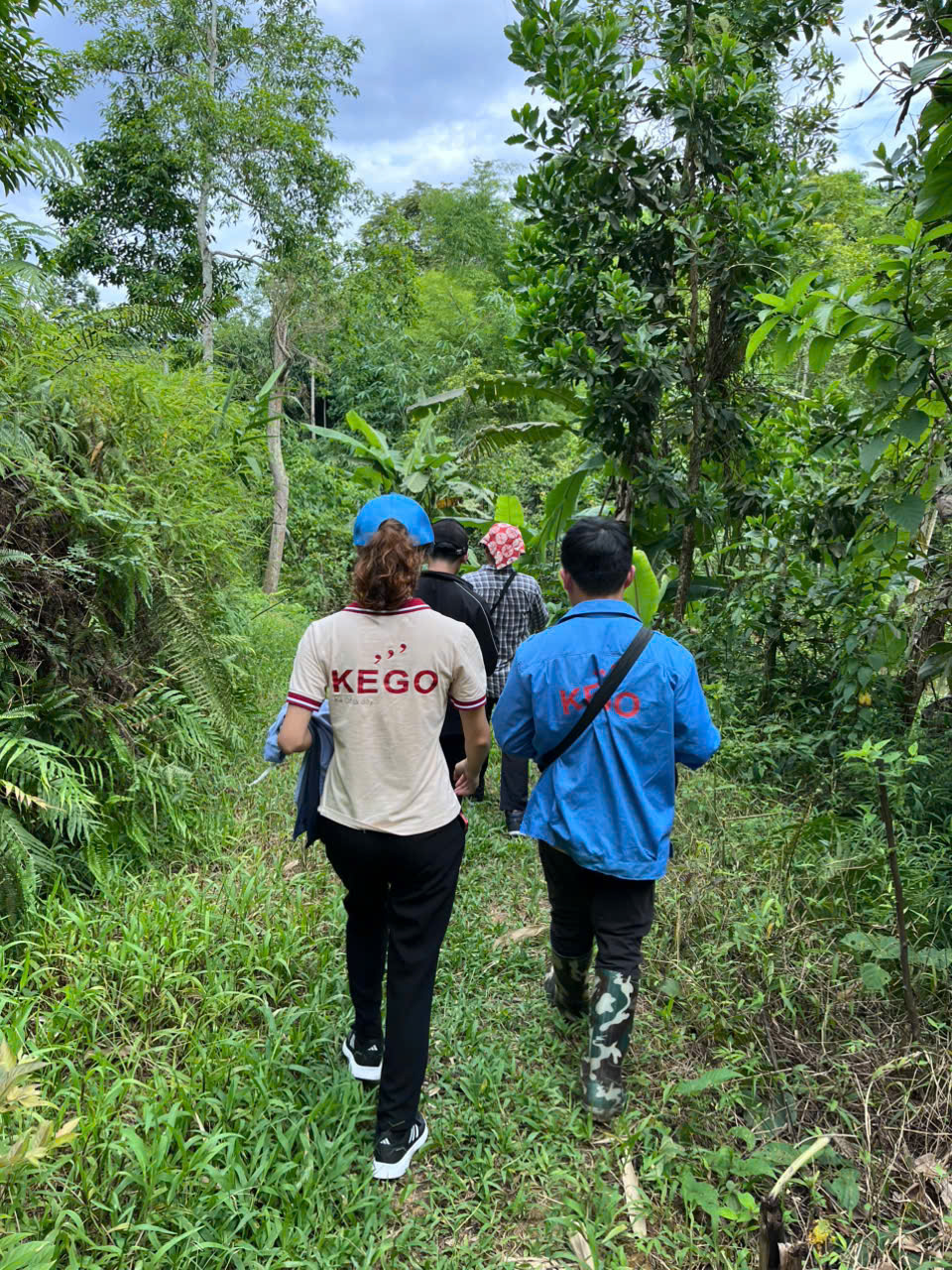
With a reliable and sustainable supply of plantation timber under control, Ke Go may be well-positioned to enter the EU market as EUDR takes effect.
The company’s wooden disposable cutlery is made from planted magnolia timber sourced in Thai Nguyen province (formerly part of Bac Kan), where the company’s production facility is also located. Recently, Ke Go was awarded FSC Forest Management (FSC-FM) certification for 4,200 hectares of forest in Thai Nguyen – a significant advantage when targeting environmentally conscious markets like the EU.
As global markets increasingly prioritize environmental protection and responsible sourcing, economic development must go hand-in-hand with social and environmental responsibility. This is also one of the commitments that Ke Go has strictly adhered to since its founding – and will continue to uphold well into the future.